
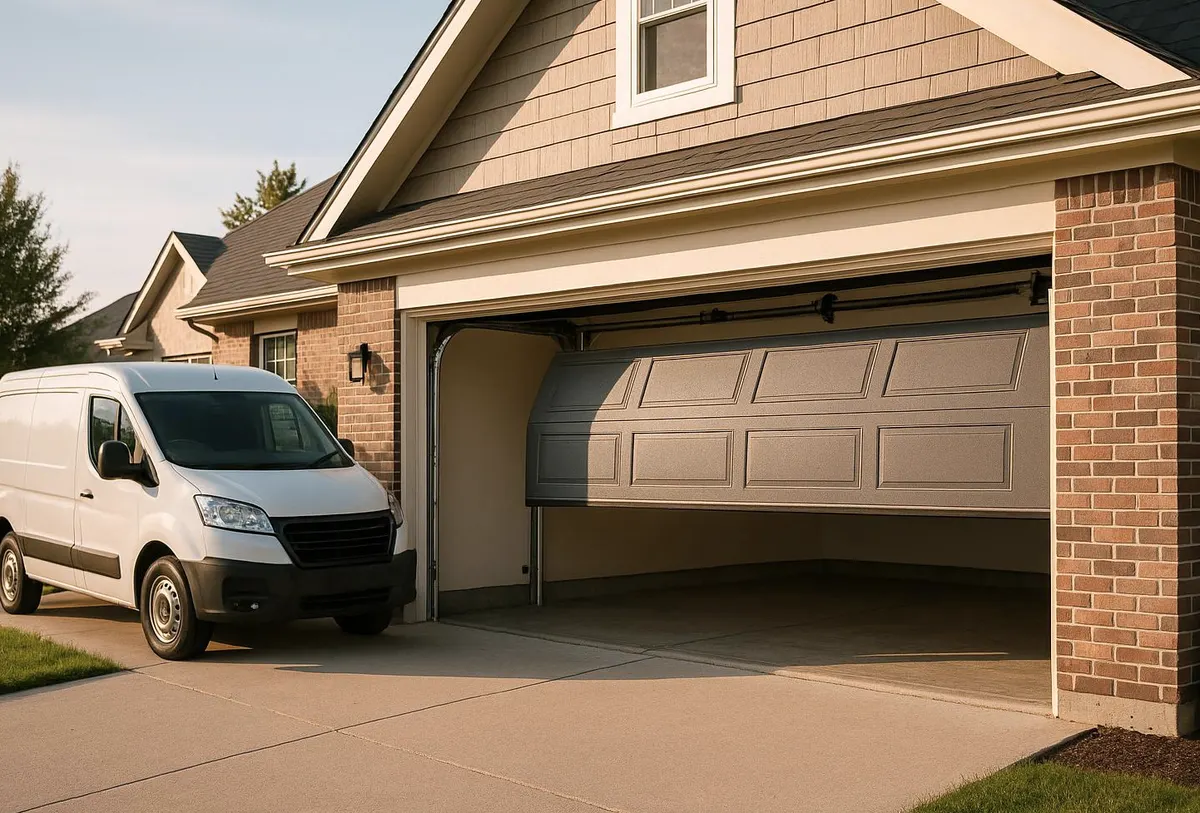
The 10 p.m. Rumble That Gives It Away
It's usually a cool desert night, the kind where sound carries, and someone finally notices it: the opener groans, chatters, or bangs every time the door goes up. Maybe it's loud enough to wake a light sleeper in the bedroom next to the garage. Maybe it's been getting worse for months and you've just tuned it out. Either way, that moment — standing in the garage wondering if the whole opener needs to go — is when most homeowners start asking what chain, belt, screw, and direct-drive openers actually have going for them.
Four Drive Types, Four Different Personalities
Chain Drive
A metal chain pulls the trolley along the rail, the same basic idea garage openers have used for decades. It's the loudest option by a wide margin — expect real vibration through the rail and into the house if the garage shares a wall with living space.
- Noise: Loudest of the four; noticeable through shared walls
- Price: Lowest upfront cost of the group, typically the budget pick in national price ranges
- Lifespan: 10–15 years with regular lubrication
- Local trade-off: Monsoon dust mixes with chain grease and turns into a gritty paste that accelerates wear — this one needs a real wipe-and-relube routine, not just an occasional squirt of oil
Belt Drive
Same mechanism as a chain drive, but a reinforced rubber or polyurethane belt replaces the metal chain. It's the quietest mechanical option and the standard recommendation for garages attached to bedrooms or living rooms.
- Noise: Quiet, minimal vibration
- Price: Mid-to-upper range
- Lifespan: 10–15 years, comparable to chain
- Local trade-off: Intense summer heat and UV exposure through a west-facing garage door or window can dry out and crack the belt faster than in milder climates — worth a visual check for surface cracking once a year
Screw Drive
A threaded steel rod moves the trolley directly, with fewer moving parts than chain or belt systems. Noise sits in the middle — not silent, but not the clatter of a chain either.
- Noise: Moderate
- Price: Mid-range
- Lifespan: 10–15 years, but performance is sensitive to lubrication
- Local trade-off: The big daily temperature swing here — scorching afternoons into cool desert nights — causes the metal rod to expand and contract more than in milder regions, and factory grease cooks off faster in summer heat, leading to jerky or inconsistent movement if it's not re-lubricated on a tighter schedule
Direct Drive
The motor itself travels along a stationary, toothed rail instead of pulling a chain or belt. With almost nothing left to wear against, it's the quietest and most consistent option over time.
- Noise: Quietest of all four, very low vibration
- Price: Highest upfront cost
- Lifespan: Often the longest-lasting of the group since there's no chain stretch or belt degradation to manage
- Local trade-off: Fewer exposed parts means less for dust and grit to grind into, which is a real advantage during dusty monsoon season — the trade-off is simply the higher purchase price
Which One Actually Makes Sense for a Desert Garage
If the garage sits right under or next to a bedroom, the noise difference between a chain drive and a belt or direct-drive opener isn't subtle — it's the difference between a 10 p.m. door cycle that nobody notices and one that wakes the house. For homes like that, belt or direct-drive is worth the extra upfront cost.
If the garage is detached, used mainly for storage or a workshop, and nobody's trying to sleep near it, a chain drive still does the job reliably — as long as you're honest with yourself about maintenance. That means actually wiping down and relubricating the chain before summer heat sets in and again after the dustiest stretches of monsoon season, not just when it starts squealing.
Screw drives are a reasonable middle ground on paper, but the daily hot-to-cool swing typical of this area works against them more than it does the other three types — they need more frequent lubrication checks to stay smooth, which is an extra maintenance commitment some homeowners would rather skip.
For most attached garages here, the practical recommendation is belt drive for a strong balance of quiet operation and reasonable price, with direct drive as the upgrade pick for anyone who wants the lowest long-term maintenance and the quietest possible door, dust and heat included.
When to Call North Las Vegas Garage Door
If your current opener is grinding, slamming, or straining to lift the door — or if you're ready to switch drive types entirely — that's a job for Garage Door Opener Repair & Installation. We'll diagnose whether it's the opener itself, worn hardware, or springs doing extra work they shouldn't be, and walk you through the trade-offs above based on your actual garage, not a generic recommendation. If the opener's fine but it's been more than a year since anything got lubricated or inspected, our Garage Door Maintenance & Tune-Up service catches the dust-and-heat wear this climate causes before it turns into a late-night repair call.
If the nightly rumble has you googling at 10 p.m., give North Las Vegas Garage Door a call. We serve homeowners throughout North Las Vegas, Aliante, Centennial Hills, and the surrounding Las Vegas valley, and we'll get your opener quiet, reliable, and ready for whatever the desert throws at it.